Show the whole motorcycle, make the mileage readable, then explain the detail that matters. One MT-07 demonstrates a useful starter set.
A buyer looking at your motorcycle remotely has to work out what is there and what is still missing from view. Six slightly different pictures of the same side leave many of the same questions unanswered. A small, deliberate set does more: establish the whole bike, show the other side, record the mileage and explain something important about its condition or equipment.
The sequence below uses a single 2020 Yamaha MT-07 from Onyx Moto’s photo archive. It is an example you can follow with a phone, not a required photo count or an appraisal of this motorcycle. Add more frames when the bike has more to explain.
First, make both sides easy to read
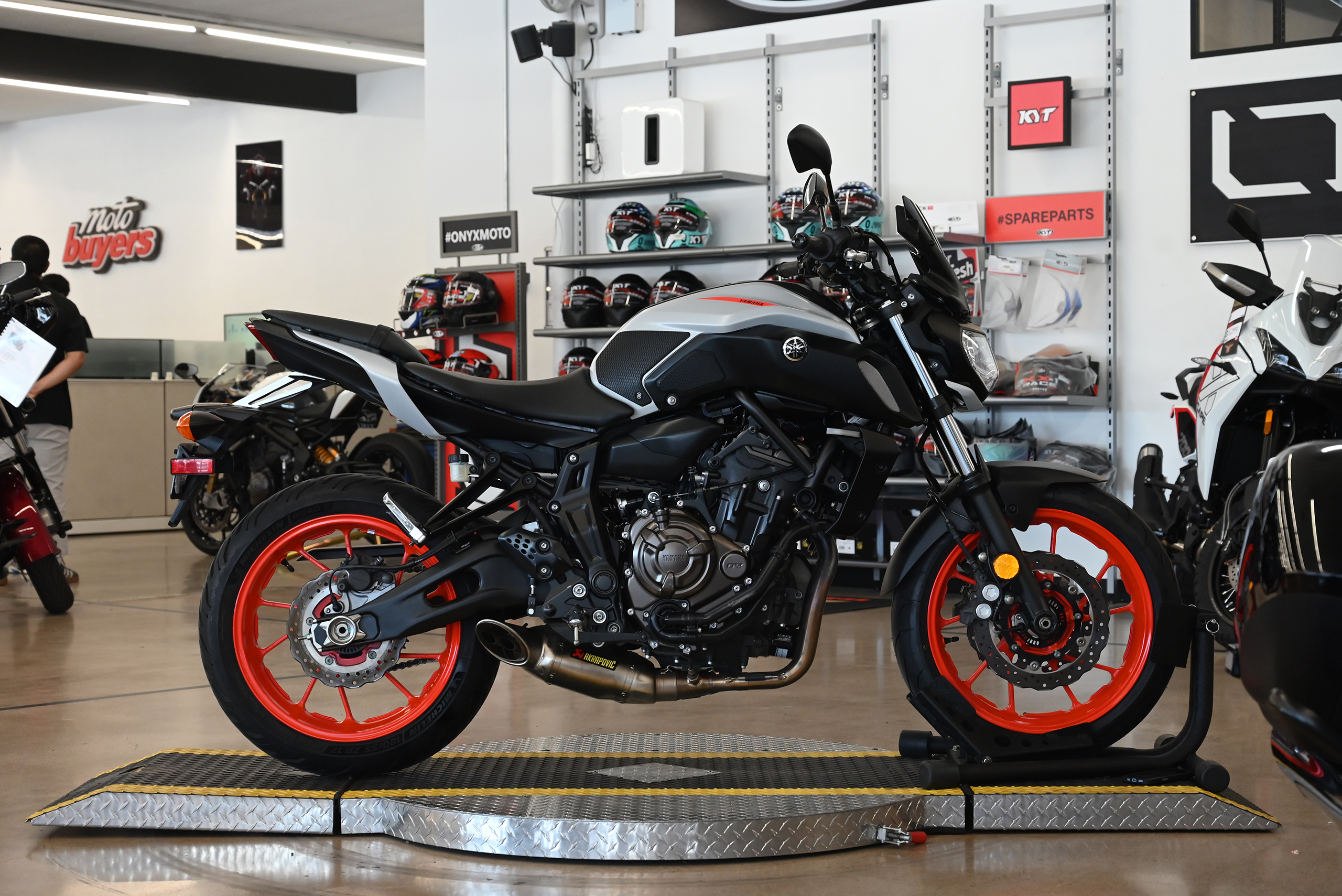
Frame 1 — right side. This 2020 Yamaha MT-07 is the same motorcycle throughout the sequence. Its exhaust is on this side. Photo: Onyx Moto.
Start with the complete motorcycle in the frame, including both wheels. Step back far enough to avoid cutting off the tire, mirror or rear fender. Use an uncluttered background and enough light to show dark engine and chassis parts. You want a person to understand the bike before zooming in.
The right-side view above shows this MT-07’s exhaust. It cannot tell the whole story about the opposite side, however good the photograph looks.
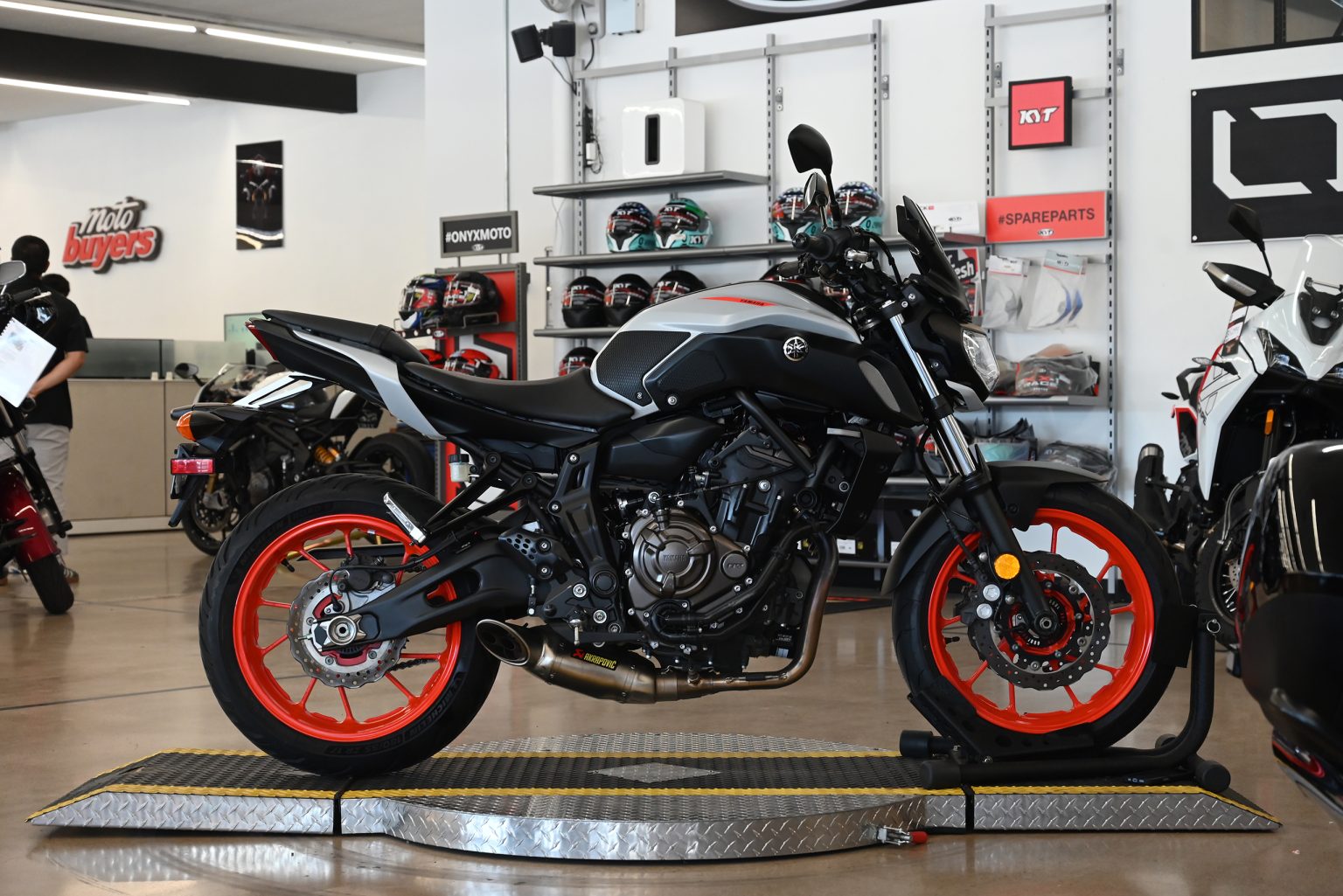
Frame 2 — left side. The opposite view adds the chain side and surfaces missing from the first photograph. Photo: Onyx Moto.
Walk around and take the second profile from a similar distance. Here, the chain side becomes visible. The matching views also make it easier to see what equipment is fitted and where a closer photograph would help. Keep the motorcycle safely parked while you move around it; there is no reason to balance it upright for the camera.
Then give the bike some depth
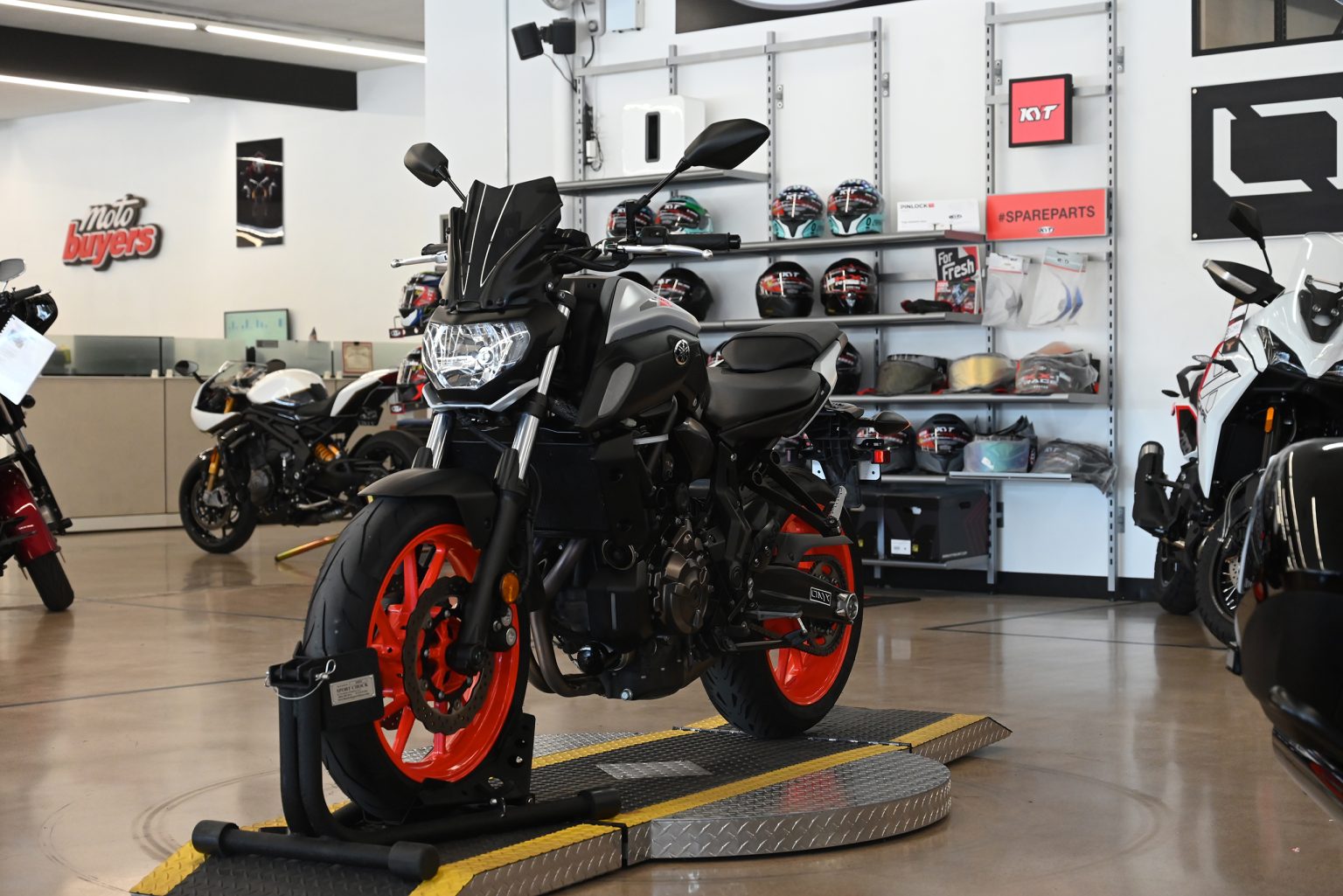
Frame 3 — front quarter. An angled view separates the headlamp, small screen, front wheel and tank. Photo: Onyx Moto.
A front-quarter view shows how the headlamp, screen, handlebar, tank and front wheel sit together. It is especially useful when a straight profile hides a component behind another one. Take the picture from a normal standing position, and check that reflections have not erased the surface you are trying to show.
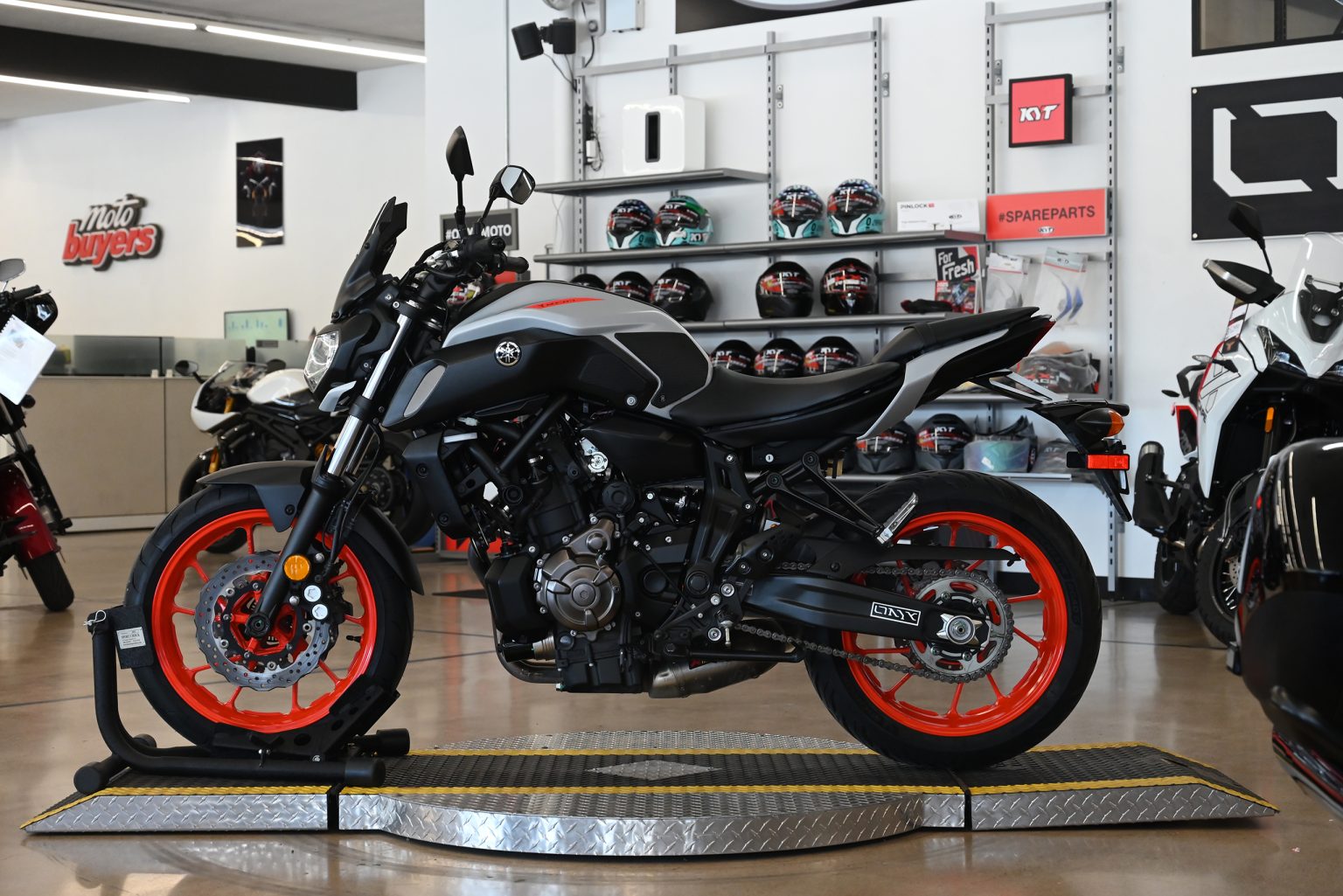
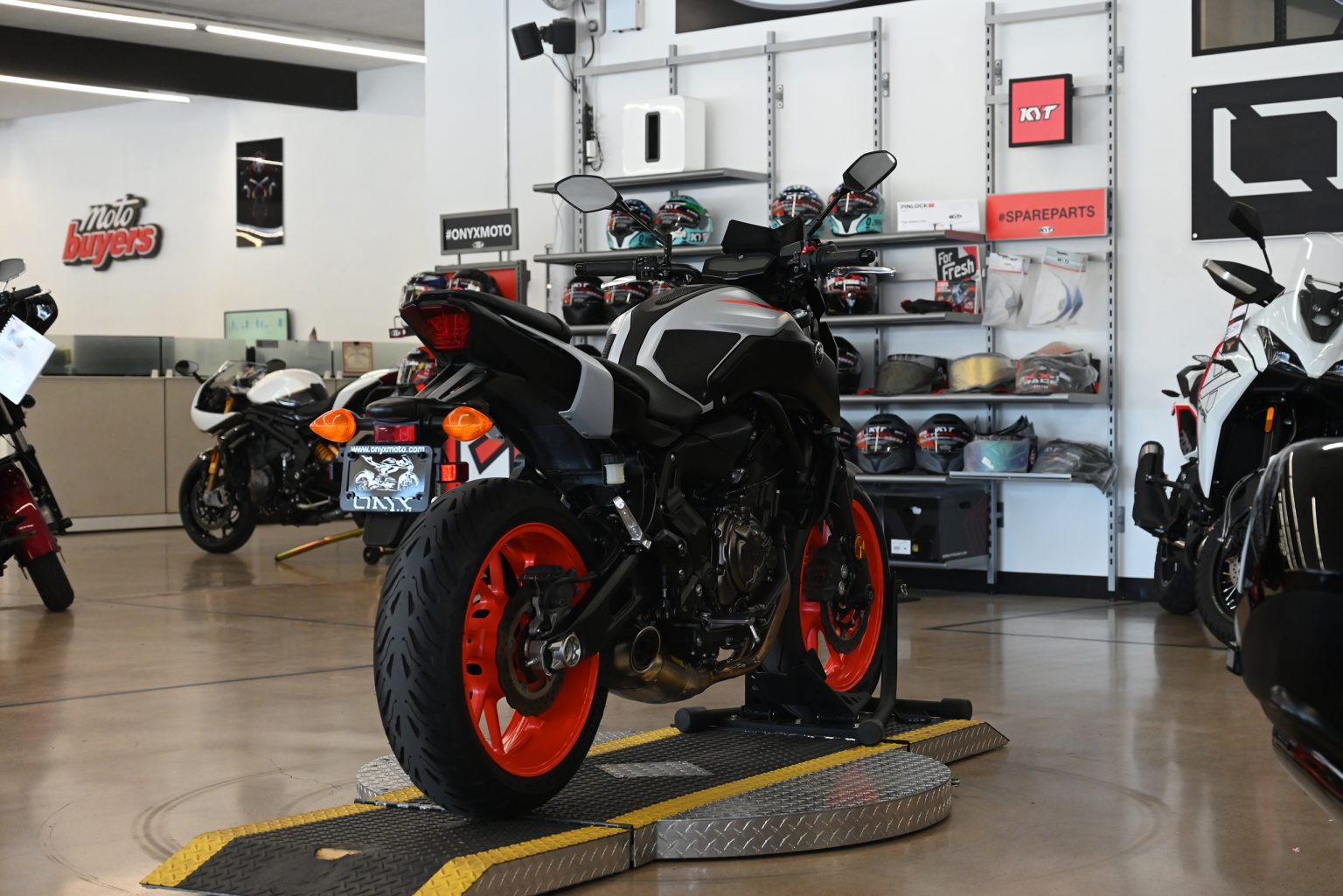
Frame 4 — rear quarter. The tail, rear wheel and exhaust occupy a different relationship than in the straight side views. Photo: Onyx Moto.
Make the fourth frame from the opposite rear corner. On this bike, it adds a clearer look at the tail and the relationship between the rear wheel and exhaust. Together, the four wider views create a reasonably complete visual introduction. They still cannot establish mechanical condition, but they can make missing information obvious.
Keep the evidence in the photograph
Use current, unfiltered pictures. Skip portrait-mode blur around parts, heavy color effects and edits that hide marks. Move private paperwork and unrelated personal items out of the frame before shooting. If something is hard to see, add another angle rather than relying on a description alone.
Finish with mileage and the detail worth explaining
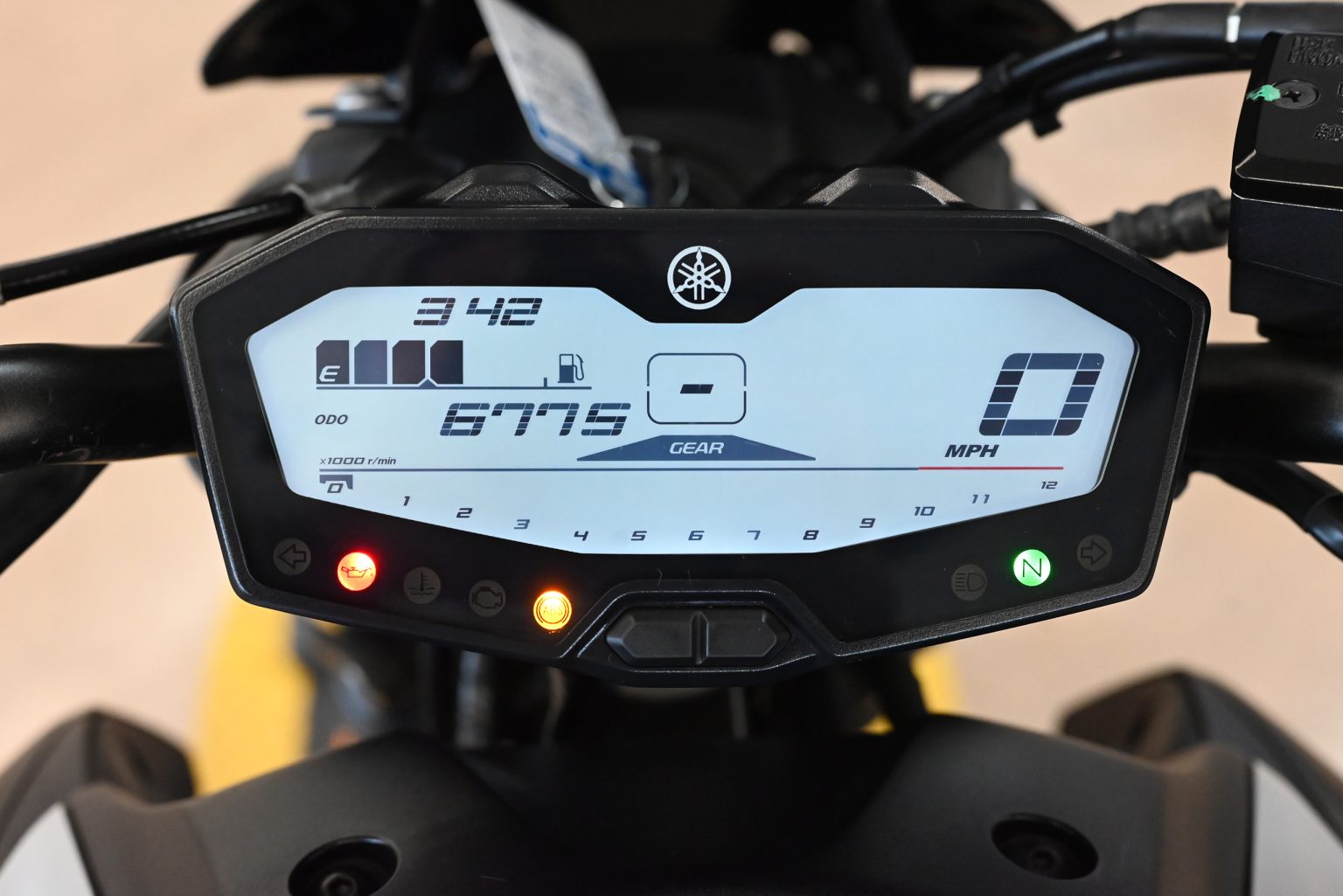
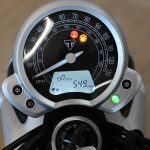
Frame 5 — mileage. The ODO label and 6,775 reading are visible in this archived image; this is not a current mileage claim. Photo: Onyx Moto.
Photograph the odometer clearly enough that the total-mileage label and reading can be identified. A trip meter answers a different question. Check the image on your phone before leaving the bike, and make sure the mileage entered in the offer request agrees with the current reading.
This archived photograph reads 6,775 beside the ODO label. It illustrates the framing; it is not a statement of the motorcycle’s mileage today. Dashboard warning lamps may also appear in an ignition-on photograph. Describe any known warning or fault separately, because a still image does not explain why a lamp is illuminated.
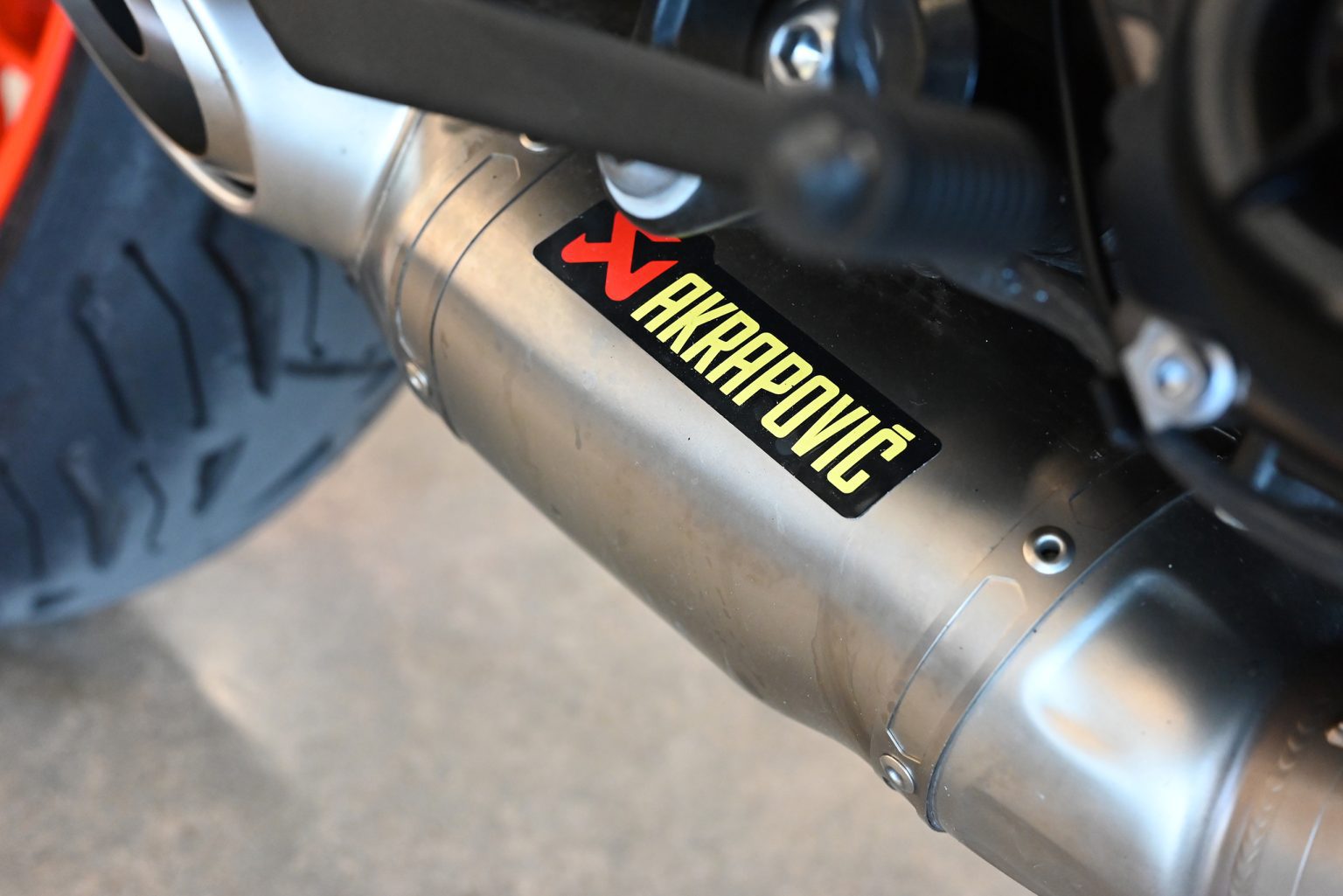
Frame 6 — relevant detail. This close-up shows the exhaust canister and its Akrapovič marking; it does not establish a part number, approval or installation history. Photo: Onyx Moto.
The last frame should earn its place. This example shows the exhaust canister closely enough to read its branding and see the mounting area. For a modification, include the exact part information if you have it and say whether the original equipment is included. A visible brand marking alone cannot establish the part’s specification or approval.
On your bike, the useful detail may instead be a scratched cover, a dent, a damaged lever, a missing trim piece or an accessory included in the sale. Photograph the whole affected area, then a closer view if necessary. State what you know about it and leave unknown history unknown. Do not omit damage because you have reached six pictures.
That is also the point to add a short written note with the year, make, model, current mileage and known condition issues. Photos work best when the text and pictures agree. Keep titles, identification and other sensitive documents for the appropriate secure paperwork step; they do not belong in a general photo gallery.
MotoBuyers’ offer guidance asks for motorcycle details, mileage and photos, and says complete condition information helps its appraisal. MotoBuyers is part of the Onyx Moto family. When your set is ready, you can request an offer from MotoBuyers; the request is free, with no obligation to accept. Further questions or an in-person verification may still be needed.
A motorcycle you know by feel becomes a collection of specifications when it is time to sell. How to weigh the buyer, the offer, and the work involved in finding its next owner.