The useful part of a service record is the work behind the phrase. Read the date, the mileage and—especially—the verbs.
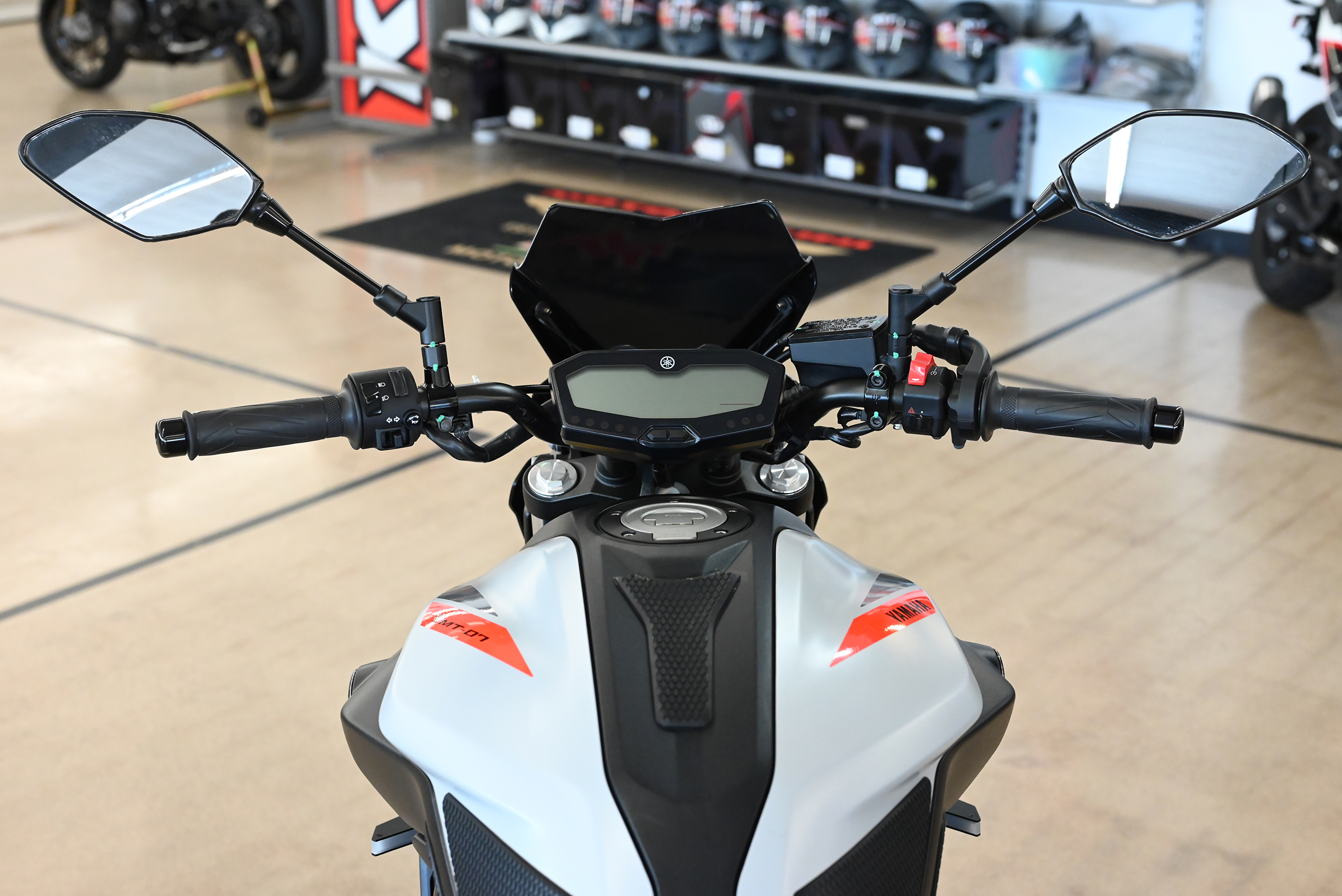
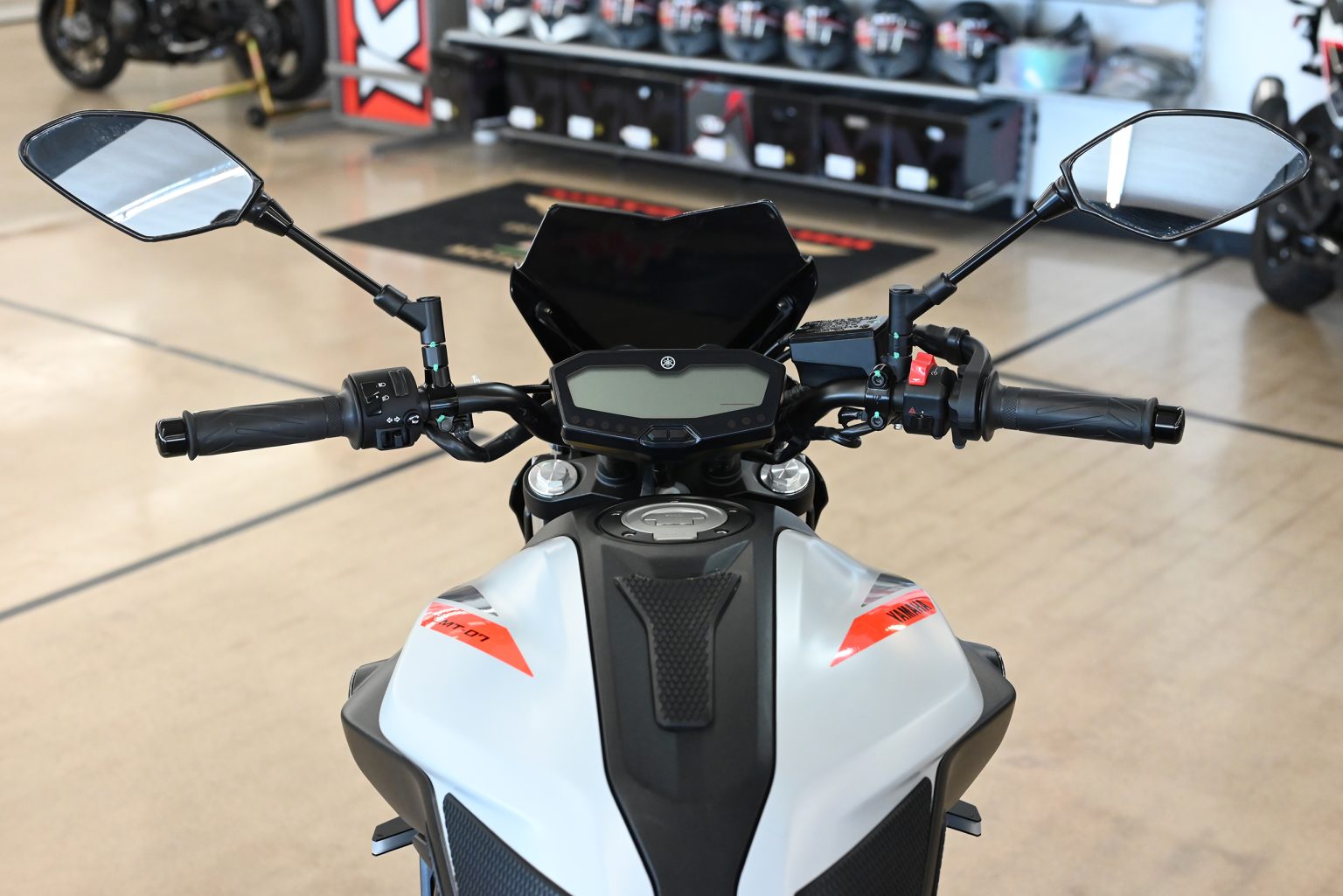
The front-brake reservoir is visible beside the right grip on this 2020 Yamaha MT-07. A photograph cannot tell you when its fluid was last changed. Photo: Onyx Moto.
“Just serviced” is a useful reason to ask for the record. It is not yet an answer to what was done. A recent visit could mean an oil change, a tire installation, an inspection, a repair—or several of those together. The difference matters when you are deciding what the motorcycle will need after you take it home.
You do not need to read an invoice like a technician. Start by asking three ordinary questions: does it belong to this bike, when was the work done, and which jobs were completed? A short, specific record can answer more than a thick folder of receipts with no clear connection to the motorcycle.
First, put the work on a timeline
Match the motorcycle details on the record to the bike you are considering. Privately compare its identifying information where necessary; there is no reason to post a previous owner’s name, address or complete paperwork in a public advertisement. Then put the records in date order and note the mileage at each visit.
The sequence gives the work context. An oil change performed a few hundred miles ago may still have happened several years ago. A much more recent invoice might document a tire purchase without saying anything about engine maintenance. Read each record for its own scope rather than letting the newest date stand in for the whole motorcycle. A long idle spell deserves its own questions; our low-mileage guide covers the work that can be needed to bring a stored bike back.
If a mileage entry appears out of sequence, ask for clarification. A typing error, a unit mismatch or a replacement instrument could need explanation. The discrepancy itself is a question to resolve; it is not enough evidence to accuse someone of misrepresenting the bike.
The verb is the evidence
Manufacturers make distinctions that casual descriptions often erase. In Yamaha’s MT-07 owner’s manual, the maintenance chart separates checking brake operation, fluid level and leakage from changing the brake fluid. The chain entry distinguishes checking its condition from adjustment and lubrication. Those are different actions, even when they concern the same component.
That distinction keeps you from overreading a line such as “brakes checked.” It does not automatically mean new pads, new fluid or new hoses. Equally, “valve clearances checked” and “valve clearances adjusted” should not be silently treated as the same job. The result of an inspection may have been that no adjustment was required.
Parts and labor together can make a record more informative. A filter receipt shows that someone bought a filter. A dated work record identifying the bike, the oil-and-filter replacement and the mileage provides a clearer account of a completed service. An owner-maintained log can be useful too; read what it documents and ask about the work rather than dismissing it because it lacks a shop logo.
Read one example without filling the gaps
Consider the teaching example below. Its date and mileage are invented, and it does not describe the photographed Yamaha or any customer’s motorcycle. The point is to separate what a record says from what a buyer might wish it said.
The follow-up is now precise: is there a later entry for the air filter, and is there a separate record of the brake-fluid change? That is a better conversation than asking whether “everything” has been done. Match the answers against the correct year-and-market owner’s manual for the motorcycle you are buying.
A gap in the folder means the work is undocumented. It does not prove neglect, and it does not prove completion. Ask what other evidence exists, then decide with a qualified shop whether an inspection or service is needed to establish a baseline. A seller’s confidence cannot settle a mechanical question that still needs examination.
Keep the same discipline after purchase. Save dates, mileages and the actual work performed, including your own maintenance. When a question remains, bring the specific item to Onyx’s service team with the relevant record. “Was the fluid changed, or was the level checked?” is a question someone can answer.
A low-mileage find can become a great motorcycle. Onyx Moto explains the extra work, fuel-system problems and calendar maintenance to check before buying.